How the Internet Actually Works (Explained Simply)
Most of us use the internet every day without thinking much about how it actually works. We send messages, watch videos, browse websites, and join video calls in seconds, often from almost anywhere in the world.
It can feel almost magical, but the internet isn’t magic. It’s a massive global network of connected computers that constantly exchange information at incredible speeds.
Understanding the basics of how the internet works doesn’t require a computer science degree. Once you break it down into simple steps, it’s surprisingly easy to see what’s happening behind the scenes every time you go online.
The internet is a giant network
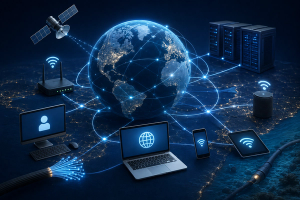
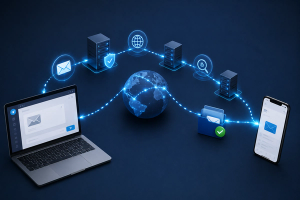
The easiest way to think about the internet is as one enormous network that connects billions of devices around the world.
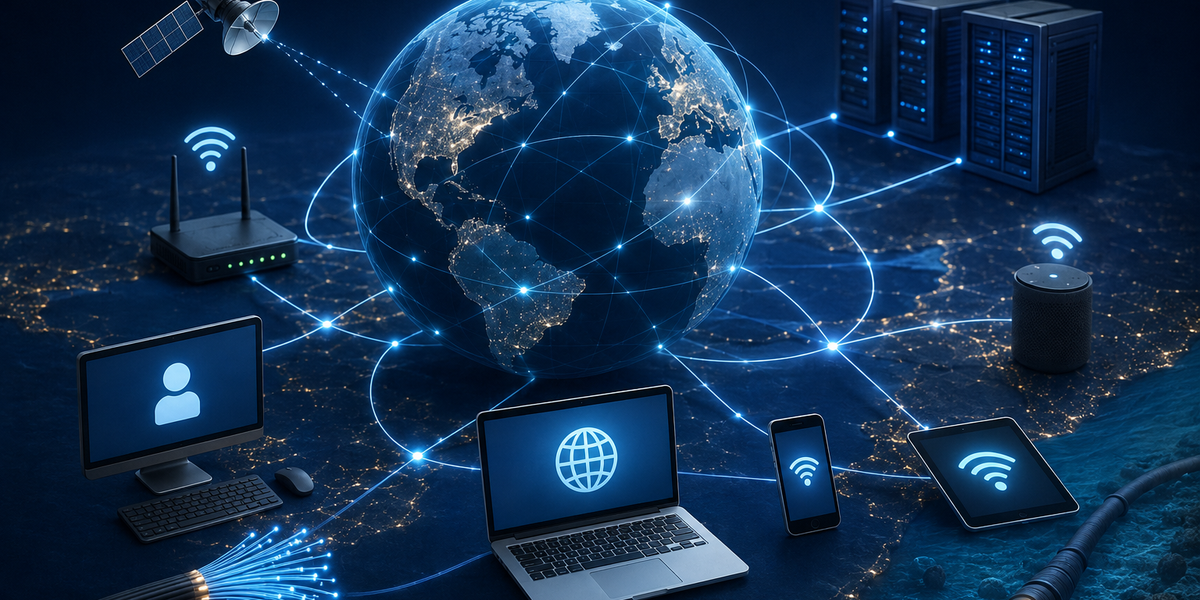
These devices include computers, smartphones, tablets, smart TVs, gaming consoles, and even smart home devices. They are all connected through cables, wireless networks, satellites, and data centers.
Instead of storing everything in one place, the internet allows devices to communicate with one another. Every time you visit a website, send an email, or stream a movie, your device is exchanging information with another computer somewhere else in the world.
Think of it like a global postal system, except instead of delivering letters, it delivers digital information in a matter of milliseconds.
What happens when you visit a website?
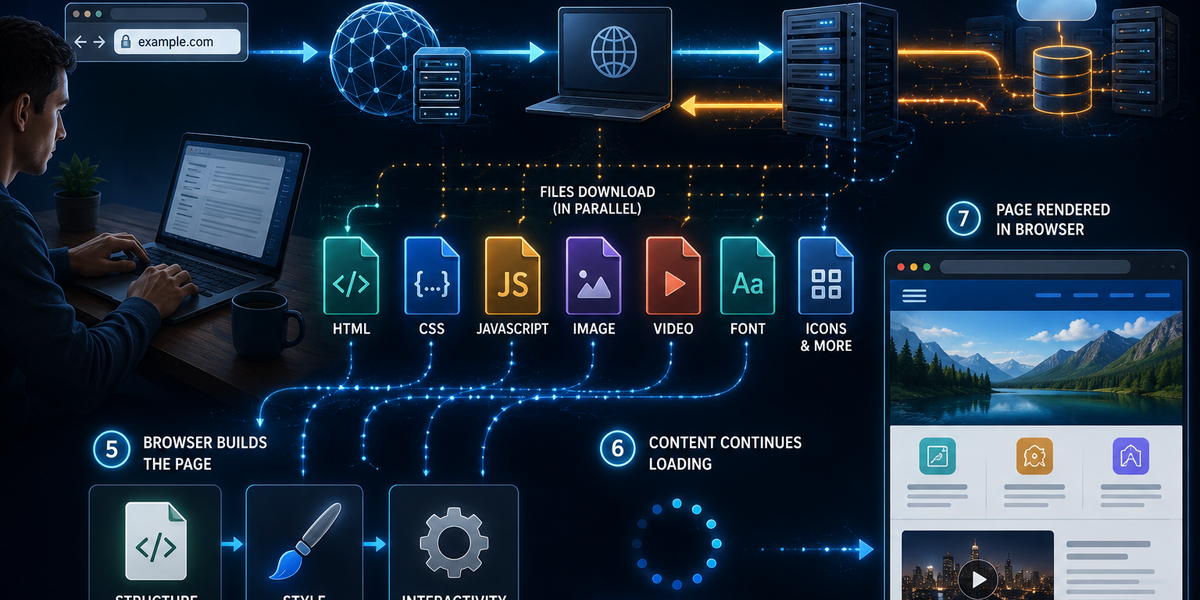
When you type a website address into your browser, several things happen almost instantly.
First, your device asks, “Where is this website located?”
A system called the Domain Name System (DNS) acts like the internet’s phonebook. It translates easy-to-read website names (like example.com) into numerical IP addresses, which computers use to identify one another.
Once the website’s location is found, your browser sends a request to the server where the website is stored.
The server then sends back the files needed to display the webpage, including text, images, videos, fonts, and design elements.
Your browser quickly puts all those pieces together, and within seconds, the website appears on your screen.
Although this sounds like a long process, it usually happens so quickly that you don’t even notice it.
Data travels in tiny pieces
One of the most interesting things about the internet is that information doesn’t travel as one large file.
Instead, it is divided into thousands—or sometimes millions—of tiny pieces called data packets.
Imagine sending a 1,000-piece puzzle through the mail. Rather than placing the entire puzzle in one huge box, you divide it into many small envelopes.
Each packet travels independently across the internet. Some may even take completely different routes before arriving at their destination.
When all the packets reach your device, they are automatically reassembled into the original file.
Whether you’re streaming a movie, downloading a document, or making a video call, this process is happening continuously in the background.
How information travels around the world
People often assume that most internet traffic travels through satellites.
While satellites are useful for remote areas and certain communications, they actually carry only a small portion of global internet traffic.
Most of the world’s internet runs through enormous fiber-optic cables, many of which are buried underground or laid across the ocean floor.
These cables transmit data using pulses of light that travel at incredible speeds, allowing information to move between continents in fractions of a second.
Wireless technologies like Wi-Fi and mobile networks connect your device to the internet, but the majority of the journey takes place through this vast network of physical cables stretching across the globe.
What do routers actually do?
With billions of devices communicating at the same time, someone—or rather, something—has to direct the traffic.
That’s the job of routers.
Routers work a bit like traffic controllers or GPS systems. Every time information is sent across the internet, routers determine the fastest and most efficient path for each packet to take.
If one route becomes congested or unavailable, routers can quickly redirect traffic through another path.
This is one reason the internet is so reliable. Even if part of the network experiences problems, information can often find another way to reach its destination.
Why some websites load faster than others
Not every website loads at the same speed, and there are several reasons why.
Your internet connection plays a role, but so do the website’s servers, how much content needs to load, and how far the information has to travel.
Many large companies use Content Delivery Networks (CDNs), which store copies of websites on servers around the world.
Instead of downloading data from a server thousands of miles away, your device connects to one that’s much closer. This significantly reduces loading times and creates a smoother browsing experience.
That’s why popular websites often feel almost instant, even when millions of people are using them at the same time.
How your information stays secure
Every time you log into an account, make an online purchase, or check your bank balance, your information travels across the internet.
To help protect this data, websites use encryption.
Encryption converts readable information into coded data that only the intended recipient can understand. Even if someone intercepts the information while it’s traveling, it appears as unreadable code rather than useful information.
You’ll often notice a small padlock icon next to a website’s address. This indicates that your connection to the website is encrypted, making it much more secure.
While no system is completely immune to cyber threats, encryption is one of the key technologies that helps keep the modern internet safe.
A global system working in seconds
The internet may seem incredibly complex, but its basic idea is surprisingly straightforward.
Your device sends a request. DNS finds the destination. Servers respond. Data travels in tiny packets through routers and fiber-optic cables. Your browser then reassembles everything into the webpage, video, message, or file you wanted.
All of this happens in just a few seconds—or often less than one second.
Behind every Google search, video stream, social media post, and online purchase is one of the largest engineering systems ever built.
The next time you open a website or send a message, it’s worth remembering that what feels like a simple click is actually the result of billions of devices working together across a global network.
It’s an extraordinary piece of technology that has become such a normal part of daily life that most of us rarely stop to think about how remarkable it really is.