Why Some Fandoms Last for Generations
Most books, movies, TV shows, and video games enjoy a moment in the spotlight before gradually fading from public attention. Yet some stories refuse to disappear.
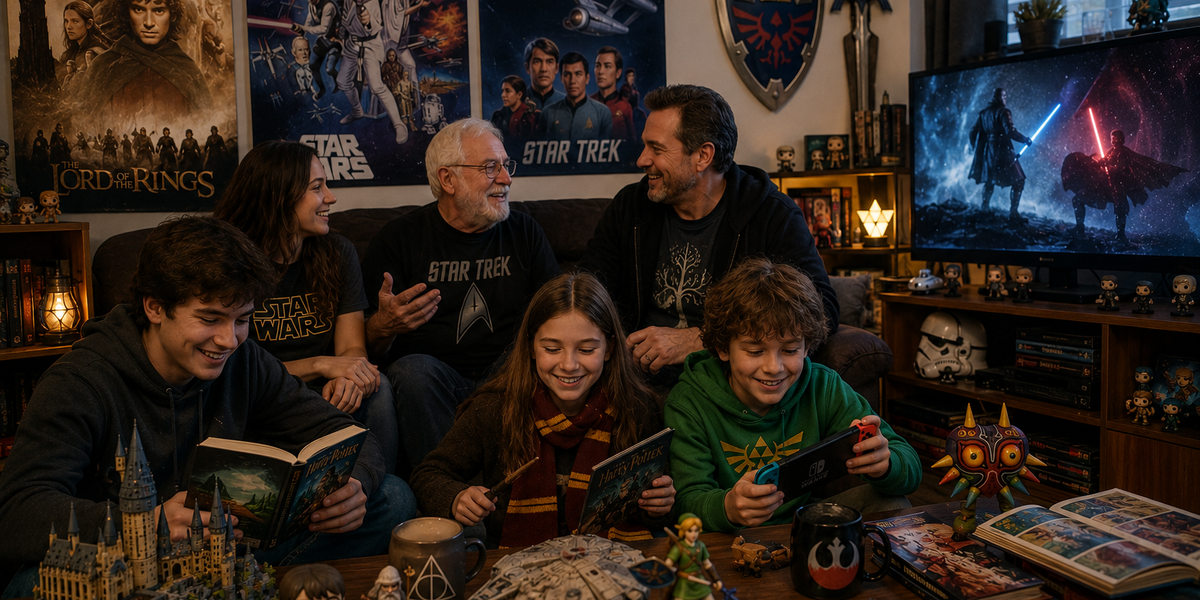
Decades after their debut, people are still reading The Lord of the Rings, watching Star Wars, discussing Star Trek, playing The Legend of Zelda, and introducing Harry Potter to new generations. Fans who grew up with these worlds often pass them on to their children, creating communities that span decades.
So why do some fandoms endure while countless others fade away?
The answer isn’t simply nostalgia. The longest-lasting fandoms combine memorable storytelling, rich worlds, passionate communities, and a constant ability to welcome new audiences.
Great stories never go out of style
Every lasting fandom begins with a compelling story.
Whether it’s an epic adventure, a mystery, or a tale of friendship, audiences return because the characters and themes continue to resonate.
The best stories explore ideas that remain relevant across generations—courage, hope, loyalty, sacrifice, curiosity, and the struggle between good and evil.
Technology and special effects may change, but those themes rarely lose their appeal.
When a story speaks to people on a deeper level, it continues finding new readers and viewers long after its original release.
Rich worlds invite endless exploration
Some fictional worlds feel almost real.
They have their own history, cultures, languages, maps, and traditions. Every revisit reveals new details that may have been missed before.
This kind of world-building encourages fans to keep exploring.
Readers analyze hidden clues, gamers search for secrets, and viewers debate unanswered questions for years.
A richly developed universe doesn’t end when the credits roll or the final page is turned. It leaves room for imagination, discussion, and discovery.
That’s one reason people happily return to the same fictional worlds again and again.
Communities keep the excitement alive
A fandom isn’t just about the original story—it’s about the people who enjoy it together.
Fans create artwork, write stories, record podcasts, organize conventions, host online discussions, and share theories that keep interest alive between new releases.
The internet has made these communities stronger than ever.
Someone who discovers a decades-old book or game today can instantly connect with thousands of other fans around the world.
These shared experiences help transform entertainment into something much more social.
Every generation discovers the story differently
One reason long-lasting fandoms survive is that they’re continually rediscovered.
A parent shares a favorite movie with their child. A new streaming service introduces an older television series to fresh audiences. A remastered video game attracts players who weren’t even born when the original launched.
Each generation experiences the story through its own perspective.
Some fans discover a classic through books, while others begin with a film adaptation or a modern game.
The entry point may change, but the emotional connection often remains the same.
New content keeps the universe growing
Many successful franchises continue expanding through sequels, prequels, spin-offs, comics, novels, or television series.
These new stories give longtime fans something fresh while making it easier for newcomers to join.
Of course, not every addition is universally loved.
Fans often debate which stories fit the original vision and which don’t.
Even so, those conversations help keep the fandom active.
A living fictional universe encourages curiosity long after the original story ends.
Nostalgia plays a role—but not the only one
Nostalgia is powerful.
Returning to a favorite story can remind people of childhood, friendships, or important moments in life.
But nostalgia alone doesn’t explain why new generations become fans.
Many classic stories continue attracting first-time audiences because they’re genuinely entertaining, well-written, and emotionally engaging.
If nostalgia were the only reason, fandoms would gradually shrink.
Instead, the strongest ones continue growing.
Fans become creators
One of the most remarkable things about enduring fandoms is how often fans contribute to them.
They build costumes, compose music, create animations, develop mods, organize events, write fan fiction, and produce detailed analysis videos.
Some eventually become professional writers, artists, filmmakers, or game developers inspired by the stories they loved growing up.
In this way, fandom becomes more than appreciation—it becomes creativity.
The community helps expand the cultural impact of the original work.
Shared passion creates lasting connections
At their heart, fandoms are communities.
They bring together people who may differ in age, nationality, language, or profession but share a common passion.
Friendships form through conventions, gaming sessions, book clubs, online forums, and fan events.
For many people, these relationships become just as meaningful as the stories themselves.
The fictional world provides the starting point, but the real-world connections help keep the fandom alive.
More than entertainment
The fandoms that last for generations offer something beyond a good story.
They create worlds people want to revisit, characters they never forget, and communities they enjoy being part of.
They inspire creativity, encourage discussion, and bring people together across decades and continents.
That’s why some stories continue thriving long after their creators imagined them.
They’re no longer just books, films, television series, or games—they’ve become shared cultural experiences passed from one generation to the next.
And as long as someone is discovering those stories for the very first time, the fandom will continue to grow.