The Difference Between the Internet and the Web
Most people use the terms internet and web as if they mean the same thing. It’s an easy mistake to make. After all, when you open a browser, visit a website, or search for information online, it feels like you’re simply “using the internet.”
In reality, the internet and the World Wide Web are two different things.
The internet is the global network that connects computers and devices around the world. The web is one of the services that runs on that network, allowing you to access websites through a browser.
Understanding the difference isn’t just a fun piece of tech trivia—it helps explain how much of the digital world actually works.
The internet is the infrastructure
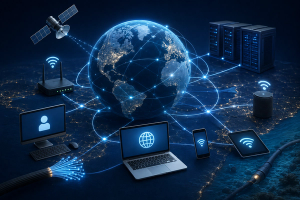
Think of the internet as a massive global network.
It connects billions of devices, including computers, smartphones, servers, and smart home gadgets, allowing them to communicate with one another.
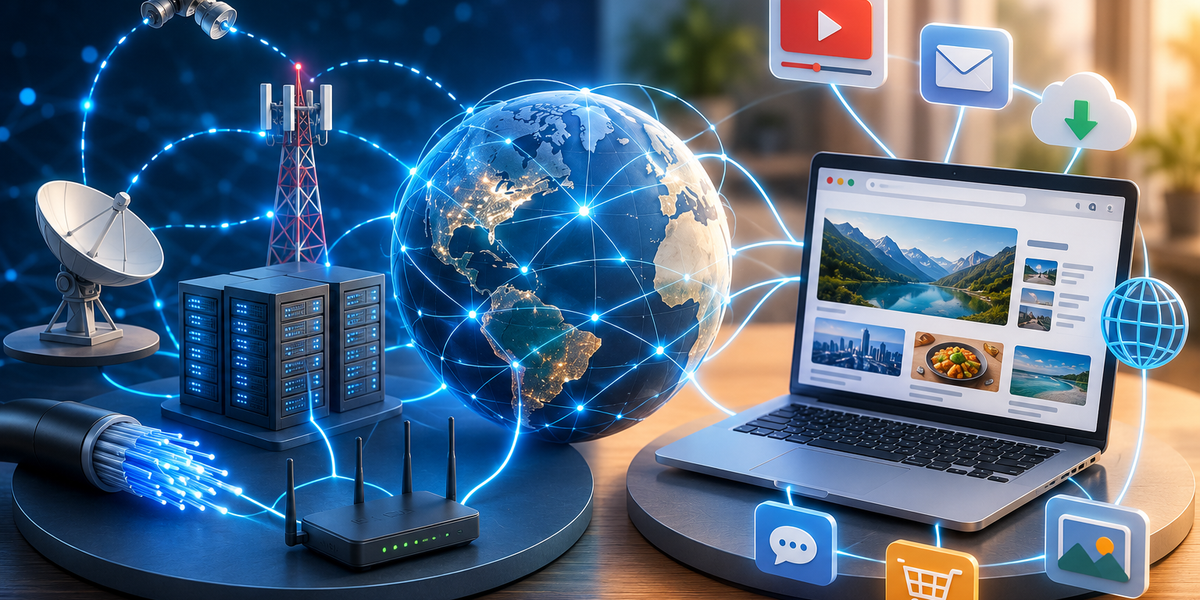
This network is built using physical infrastructure such as:
- Fiber-optic cables
- Undersea internet cables
- Cell towers
- Routers
- Data centers
- Satellites (in some cases)
These components work together to move data from one device to another, whether you’re sending an email, making a video call, or streaming a movie.
Without the internet, none of these services would be able to communicate.
The web is a service that runs on the internet
The World Wide Web, often shortened to simply the web, is one of many services that uses the internet.
The web consists of billions of webpages connected through hyperlinks and accessed using web browsers such as Chrome, Safari, Firefox, or Edge.
When you type a website address into your browser, you’re using the web—not the internet itself.
The browser communicates with web servers across the internet to retrieve the page you’re requesting and display it on your screen.
In other words, the web depends on the internet, but the internet doesn’t depend on the web.
A simple analogy
One of the easiest ways to understand the difference is to imagine a road system.
The internet is like the roads, highways, bridges, and tunnels that connect cities.
The web is like one type of vehicle traveling on those roads.
Without roads, vehicles couldn’t move.
But roads can carry many different kinds of traffic—not just cars.
Similarly, the internet supports many different services, and the web is only one of them.
The internet does much more than websites
Many people associate the internet entirely with browsing websites.
In reality, websites are just one part of what the internet does.
Other internet services include:
- Video calls
- Online gaming
- Cloud storage
- File sharing
- Music and video streaming
- Messaging apps
- Software updates
Even if the World Wide Web didn’t exist, many of these services could still operate because they use the internet in different ways.
The internet is the foundation that supports them all.
How the web actually works
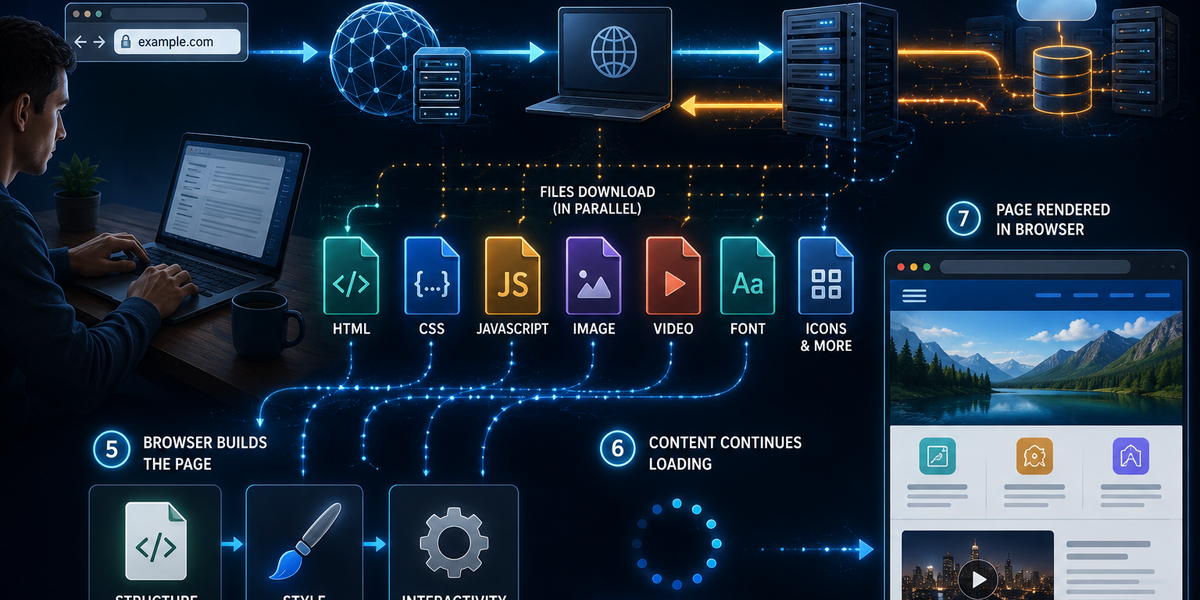
Every website is stored on a computer called a web server.
When you enter a website address or click a link, your browser sends a request through the internet to that server.
The server responds by sending back the webpage, including its text, images, videos, and other content.
Your browser then assembles everything and displays it on your screen.
This entire process usually happens in just a fraction of a second.
Although it feels instant, your request may travel through multiple countries before reaching the correct server.
The web came after the internet
Another common misconception is that the web created the internet.
In fact, the opposite is true.
The internet already existed before the World Wide Web was invented.
In 1989, Tim Berners-Lee developed the World Wide Web while working at CERN.
His goal was to make it easier for researchers to share information by linking documents together using hyperlinks.
That idea eventually grew into the web we use today.
The internet provided the infrastructure.
The web made it far easier for ordinary people to access information.
Why the confusion exists
Most people use the web every time they connect to the internet.
Because websites are one of the most visible online activities, it’s natural to assume the two terms mean the same thing.
In everyday conversation, people often say they’re “on the internet” when they’re really browsing the web.
Technically, both statements are true—but they describe different parts of the same system.
It’s a bit like saying you’re “on the road” while driving a car.
The road and the car work together, but they aren’t the same thing.
Both are essential
Neither the internet nor the web would be nearly as useful without the other.
The internet provides the global network that moves information.
The web organizes that information into websites that people can easily browse and navigate.
Together, they have transformed communication, education, business, entertainment, healthcare, and nearly every aspect of modern life.
Every time you visit a website, stream a video, or search for information, you’re benefiting from both technologies working together behind the scenes.
Two technologies working as one
Although people often use the terms interchangeably, the Internet and the web are not the same thing.
The internet is a worldwide network that connects devices and transfers data. The World Wide Web is a system of linked webpages that runs on top of that network.
Without the internet, the web couldn’t exist.
Without the web, the internet would still function—but it would be far less accessible to most people.
The next time someone says they’re “using the internet,” you’ll know there’s a good chance they’re actually using one small part of it: the World Wide Web.