
Why Some Video Games Become Cultural Icons
Every year, thousands of video games are released.
Most are enjoyed for a while before fading into the background. But every so often, a game comes along that becomes much more than entertainment. It shapes conversations, inspires communities, influences other games, and remains popular long after its release.
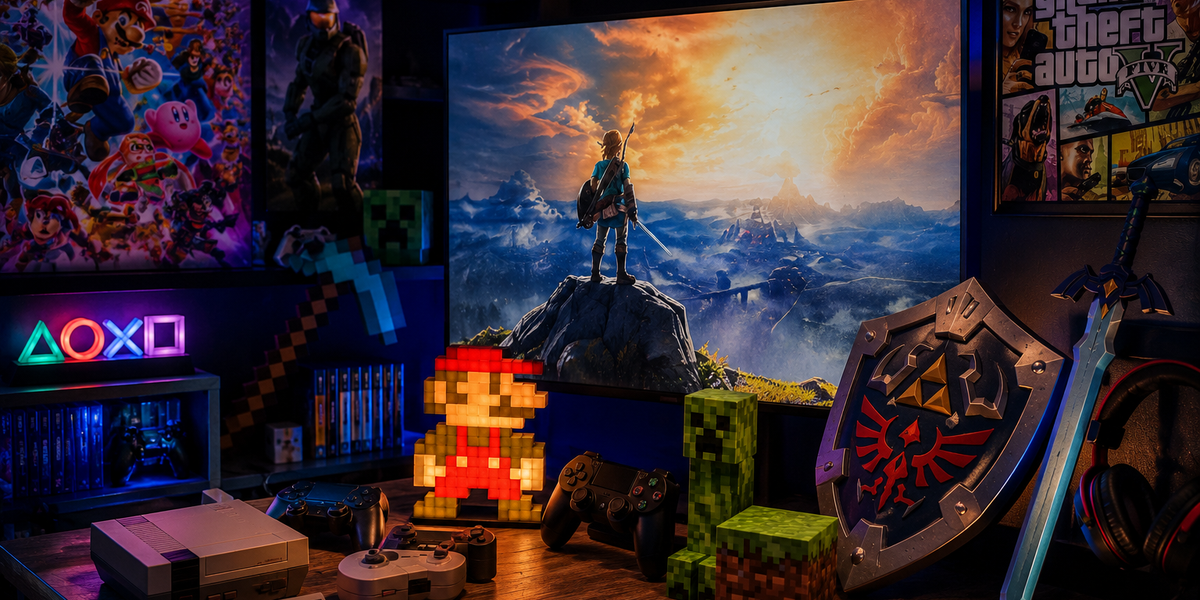
Games like Tetris, Super Mario Bros., Minecraft, The Legend of Zelda, and Grand Theft Auto V are recognized even by many people who have never played them. They have become cultural icons, leaving a lasting impact on players and the gaming industry alike.
So what makes certain games stand the test of time while others are quickly forgotten? It’s usually not just one factor, but a combination of creativity, timing, and the communities that grow around them.
Great gameplay comes first
A cultural icon almost always begins with excellent gameplay.
The best games are easy to understand but difficult to master. They introduce mechanics that feel intuitive while offering enough depth to keep players engaged for years.
Take Tetris as an example. The rules are incredibly simple: rotate and stack falling blocks to complete lines. Yet the game remains challenging no matter how many times you play.
Other iconic games succeed because they reward exploration, creativity, strategy, or teamwork. Players return again and again because the experience stays enjoyable long after the first session.
Without strong gameplay, even the biggest marketing campaign is unlikely to create a lasting legacy.
Memorable characters and worlds
Many legendary games create worlds that players never want to leave.
Characters like Mario, Link, Lara Croft, Master Chief, and Kratos have become recognizable far beyond gaming. Their stories, personalities, and adventures help players form emotional connections that last for years.
Even games without central characters, such as Minecraft, build memorable worlds by giving players the freedom to create their own stories.
When players feel attached to a game’s universe, it becomes more than a pastime—it becomes part of popular culture.
Innovation changes the industry
Many iconic games introduce ideas that influence countless others.
Sometimes it’s a new gameplay mechanic. Other times it’s a technological breakthrough or a different way of telling stories.
For example, Minecraft popularized large-scale sandbox creativity, while Fortnite helped bring the battle royale genre into the mainstream. Open-world games, realistic physics, online multiplayer, and cinematic storytelling all became more widespread because earlier games proved those ideas could succeed.
Innovation doesn’t always mean inventing something entirely new. Sometimes it’s combining existing ideas in a way that feels fresh.
Communities keep games alive
A game’s success doesn’t end when it’s released.
Some of the biggest cultural icons owe their longevity to the communities that grow around them.
Players create tutorials, livestreams, fan art, mods, competitions, and online discussions that keep games relevant for years.
Modern multiplayer games often become social spaces where friends meet regularly, turning gaming into a shared experience rather than a solo activity.
The stronger the community, the longer a game tends to remain part of popular culture.
Timing matters
Sometimes a game arrives at exactly the right moment.
New technology, faster internet connections, or changing player interests can create opportunities that didn’t exist before.
For example, online multiplayer games flourished as broadband internet became more common. Mobile gaming exploded alongside smartphones. Streaming platforms introduced entirely new ways for people to discover games.
Even an excellent game can struggle if it’s released before players are ready for it.
Timing often plays a bigger role than people realize.
Great games continue to evolve
Many iconic games don’t remain successful by standing still.
Developers release updates, expansions, seasonal events, and new content that keep players engaged.
Some games have remained popular for over a decade because they’re constantly improving rather than remaining exactly as they were at launch.
Listening to player feedback, fixing problems, and introducing fresh ideas helps games stay relevant in an industry that changes rapidly.
Continuous improvement has become one of the defining characteristics of long-lasting games.
Games influence more than gaming
When a game becomes a cultural icon, its influence often extends beyond entertainment.
Popular games inspire movies, television shows, books, clothing, music, toys, and even educational tools.
Phrases, characters, and soundtracks become recognizable around the world.
Gaming has also influenced architecture, design, storytelling, music production, and online communities.
Today, video games are one of the world’s largest forms of entertainment, shaping culture in ways that were almost unimaginable a few decades ago.
Not every blockbuster becomes a classic
High sales alone don’t guarantee cultural significance.
Some games sell millions of copies but are quickly forgotten. Others begin with modest audiences before gradually becoming classics through word of mouth and dedicated communities.
What often separates iconic games from successful ones is lasting influence.
People continue talking about them, replaying them, and introducing them to new generations years after release.
Their ideas live on through the games that follow.
More than just entertainment
The most memorable video games do more than provide fun for a few hours.
They create experiences that people remember, friendships that last, communities that grow, and innovations that influence an entire industry.
Whether through unforgettable characters, groundbreaking gameplay, creative freedom, or thriving online communities, these games become part of something much bigger than themselves.
In years to come, new technologies will undoubtedly transform gaming once again.
But the games that become cultural icons will continue to remind us that great ideas, meaningful experiences, and shared memories can leave a lasting mark—not just on players, but on popular culture itself.