How the Web Was Actually Invented (And Why)
Today, it’s hard to imagine life without the web.
We use it to search for information, shop online, watch videos, read the news, book flights, attend meetings, and stay connected with people around the world. For many of us, opening a web browser is one of the first things we do each day.
But the World Wide Web wasn’t created to build social media, online shopping, or streaming services. It began with a much simpler goal: helping scientists share information more easily.
The story of how the web was invented is one of the most important chapters in the history of technology—and it started with a problem that needed solving.
The internet came first
One of the biggest misconceptions is that the internet and the World Wide Web are the same thing.
They’re not.
The internet is the global network of computers that allows devices to communicate with one another. It had already existed for years before the web was invented.
The World Wide Web is a service that runs on top of the internet.
You can think of the internet as a system of roads, while the web is one of the many ways people travel on those roads. Other internet services, such as email and file transfers, can exist without the web.
The invention of the web made the internet much easier for ordinary people to use.
A scientist had a simple idea
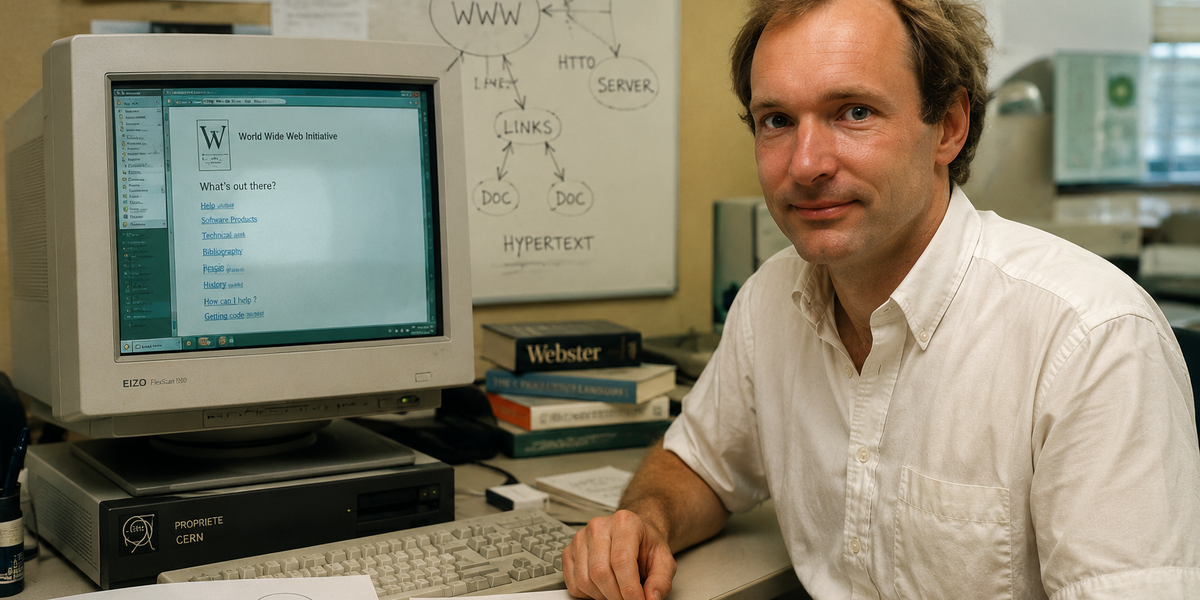
In 1989, Tim Berners-Lee was working at CERN, one of the world’s largest scientific research organizations.
Scientists from different countries were collaborating on complex projects, but sharing information wasn’t easy. Documents were stored on different computers using different systems, making it difficult to find and connect related information.
Berners-Lee believed there had to be a better way.
His idea was to create a system where documents could be linked together electronically, allowing researchers to move from one document to another simply by clicking a link.
That idea became the foundation of the World Wide Web.
Three inventions made the web possible
To turn his idea into reality, Berners-Lee developed three key technologies that are still used today.
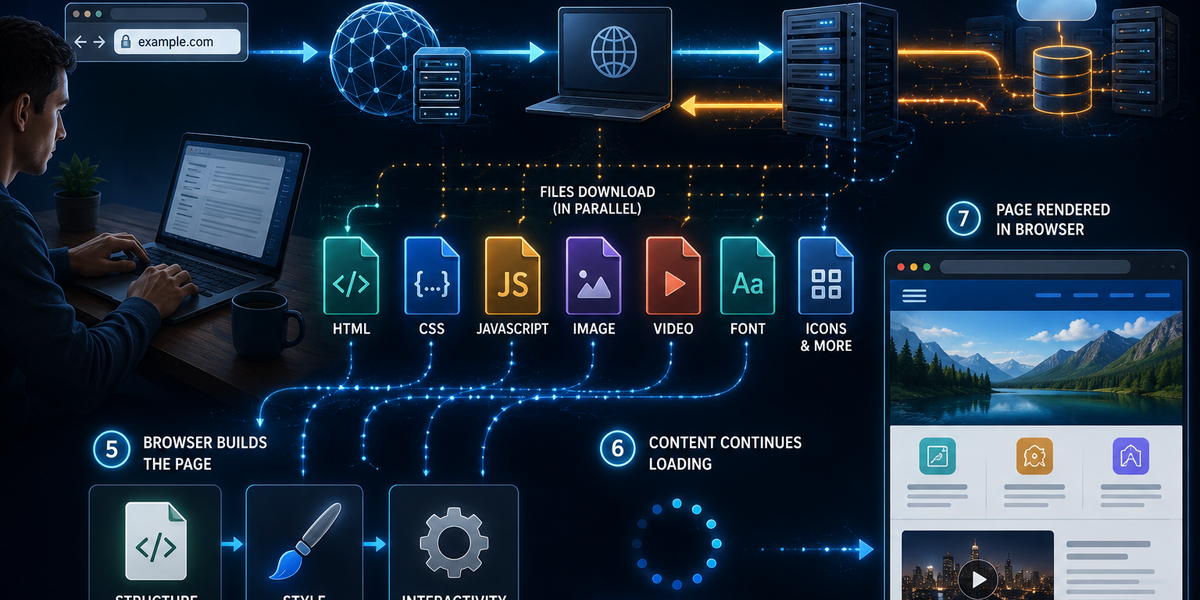
The first was HTML (HyperText Markup Language), which provides the structure of a web page.
The second was HTTP (HyperText Transfer Protocol), the communication system that allows web browsers and web servers to exchange information.
The third was the URL (Uniform Resource Locator), commonly known as a web address, which gives every web page its unique location.
Together, these three technologies created a simple but powerful system for sharing information across the internet.
Even decades later, every time you visit a website, these technologies are still working behind the scenes.
The first website
In 1991, the world’s first website went online.
It wasn’t filled with images, videos, or interactive features like modern websites.
Instead, it explained what the World Wide Web was, how it worked, and how people could create their own web pages.
The goal wasn’t entertainment—it was helping others understand and adopt the new technology.
As more organizations began creating websites, the web quickly expanded beyond the scientific community.
Web browsers made the web accessible
In the early days, using the web required technical knowledge.
That changed when graphical web browsers were introduced.
Instead of typing complicated commands, people could click links, view images, and navigate websites using simple visual interfaces.
This made the web far more accessible to businesses, schools, governments, and the general public.
Within just a few years, millions of people were using the web to find information, communicate, and explore an entirely new digital world.
Why the web grew so quickly
One reason the web spread so rapidly was that its core technologies were made openly available.
Instead of charging licensing fees, Berners-Lee wanted the web to remain an open platform that anyone could use, improve, and build upon.
This encouraged developers, universities, businesses, and entrepreneurs around the world to create websites and new online services.
As internet access expanded, the web became the foundation for online shopping, search engines, digital news, social media, cloud computing, online education, and countless other innovations.
Its open design helped fuel decades of technological growth.
The web continues to evolve
The first websites were simple pages containing mostly text.
Today’s web is dramatically different.
Modern websites support video streaming, online gaming, artificial intelligence, real-time collaboration, virtual meetings, interactive maps, and much more.
The technology behind the web has continued evolving, but its core principles remain the same: linking information so people can easily access and share knowledge.
What began as a tool for scientists has become one of the most important communication platforms ever created.
A simple idea with extraordinary impact
The invention of the World Wide Web wasn’t about creating online shopping or social networks.
It was about making information easier to share.
By combining hyperlinks, web pages, and a universal system for accessing documents, Tim Berners-Lee transformed the internet from a technical network into something millions—and eventually billions—of people could use.
Today, the web connects people, businesses, schools, governments, and communities across the globe.
It powers much of modern life, yet its original purpose remains surprisingly simple: helping people find, share, and connect information.
Sometimes, the inventions that change the world begin not with a grand vision, but with a practical solution to an everyday problem.