The Patents That Defined the Modern World
Every day, we use inventions that have transformed the way we live. We unlock our smartphones, switch on lights, drive cars, browse the internet, and rely on medicines that previous generations could only dream of.
Behind many of these breakthroughs lies an important but often overlooked part of innovation: the patent.
A patent doesn’t guarantee that an invention will change the world, but it does give inventors the exclusive right to profit from their creations for a limited period. This protection encourages people and companies to invest time, money, and effort into developing new ideas that might otherwise never become reality.
Some patented inventions have gone on to reshape entire industries—and our daily lives.
What is a patent?
A patent is a legal right granted to an inventor for a new and useful invention.
In exchange for publicly explaining how the invention works, the inventor receives exclusive rights to make, use, or sell it for a limited number of years.
This system benefits both inventors and society.
Inventors have an incentive to innovate because their ideas are protected, while the public eventually gains access to the knowledge once the patent expires.
Without patents, many companies might choose to keep important inventions secret instead of sharing how they work.
The light bulb brought electricity into everyday life
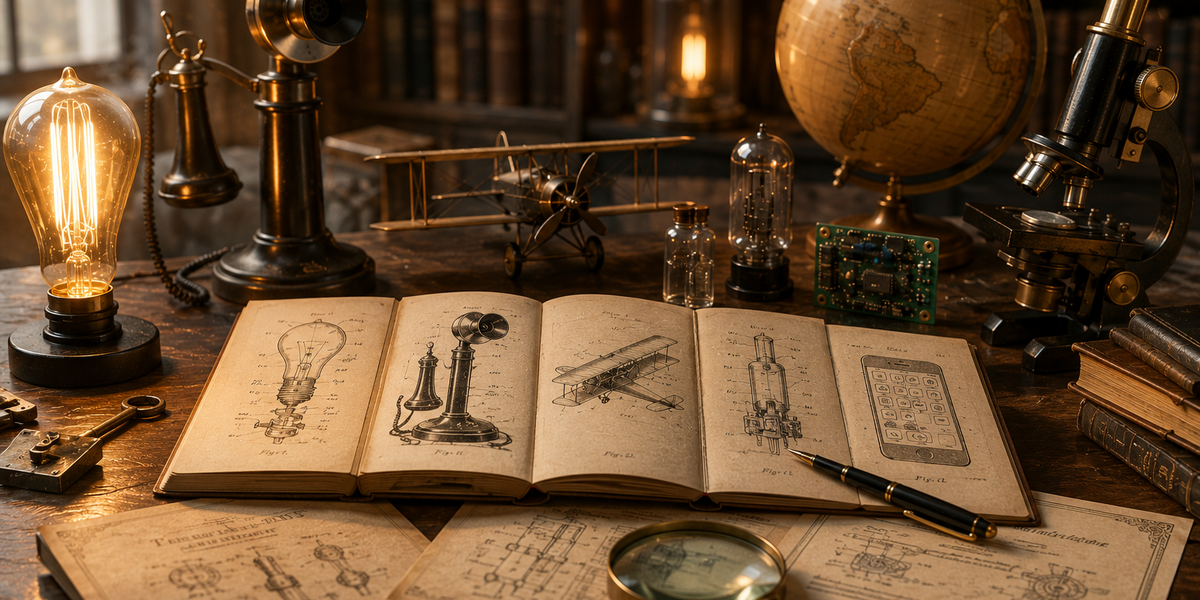
While electric lighting existed in various forms before him, Thomas Edison is often associated with creating one of the first practical and commercially successful incandescent light bulbs.
His work—and the patents that protected it—helped accelerate the spread of electric lighting around the world.
Homes, factories, offices, and streets were transformed.
People could work after sunset, cities became safer at night, and industries expanded thanks to reliable artificial lighting.
The light bulb became one of the defining inventions of the modern age.
The telephone changed communication forever
Before the telephone, long-distance communication depended on letters or telegraphs.
The patent granted to Alexander Graham Bell in 1876 became one of history’s most influential.
The telephone allowed people to speak directly across great distances almost instantly.
Over time, this invention evolved into mobile phones and eventually today’s smartphones, fundamentally changing how families, businesses, and entire societies communicate.
Few patents have had such a lasting impact on everyday life.
The airplane made the world smaller
When the Wright brothers patented their system for controlling powered flight, they helped launch the aviation industry.
Although airplanes have changed dramatically since those early designs, the basic breakthrough opened the door to modern air travel.
Today, millions of people fly every day for business, tourism, education, and family visits.
Global trade, emergency aid, and international cooperation all depend heavily on technologies that began with those early aviation innovations.
Life-saving medicines transformed healthcare
Some of the world’s most important patents are found not in electronics or transportation, but in medicine.
Patented drugs and vaccines have helped prevent diseases, treat infections, and extend human life.
Medical companies invest billions of dollars researching new treatments, often relying on patents to recover those investments if a medicine proves successful.
Although debates continue about balancing innovation with affordable access, there’s little doubt that patented medical discoveries have saved countless lives.
The transistor powered the digital revolution
One of the most important inventions of the 20th century is something most people never see.
The transistor is a tiny electronic component that controls electrical signals.
It replaced bulky vacuum tubes, allowing electronic devices to become smaller, faster, more reliable, and far more energy efficient.
Without transistors, modern computers, smartphones, televisions, and countless other electronic devices simply wouldn’t exist.
Nearly every digital technology we rely on today can trace its history back to this breakthrough.
Modern smartphones combine thousands of patented ideas
Today’s smartphone isn’t based on a single patent.
Instead, it’s built using thousands of patented technologies developed by companies around the world.
Its touchscreen, wireless communication, cameras, batteries, processors, display technologies, and security features all rely on decades of innovation.
Every smartphone represents the combined work of countless inventors who each contributed small improvements over many years.
This demonstrates an important truth about innovation: revolutionary products are often built from many incremental inventions rather than one groundbreaking idea.
Patents encourage innovation
Developing a new technology is often expensive and risky.
A company may spend years researching an idea without knowing whether it will succeed.
Patents help reduce that risk by giving inventors a period of exclusive rights to their inventions.
This allows businesses to invest confidently in research and development, knowing they have an opportunity to recover their costs if their innovation succeeds.
At the same time, published patents allow other inventors to learn from existing technologies and develop new improvements once the protection period ends.
Not every great invention is patented
Although patents have played a major role in technological progress, not every important innovation relies on them.
Some inventors choose to publish their work openly. Others rely on trade secrets instead of patents.
Open-source software, scientific collaboration, and shared research have also contributed enormously to technological progress.
Innovation thrives in many different ways.
Patents are simply one of the tools that help encourage new ideas and reward inventors for their work.
Small ideas can change the world
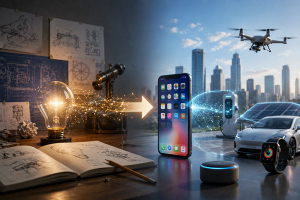
Looking back through history, it’s remarkable how many everyday technologies began as simple inventions protected by patents.
A practical light bulb. A working telephone. Controlled flight. Tiny electronic switches. Medical breakthroughs.
At the time, each represented a solution to a specific problem.
Together, they transformed how people live, communicate, travel, work, and stay healthy.
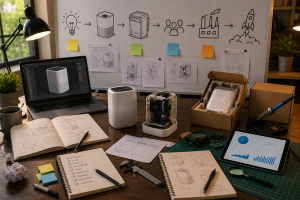
The next world-changing invention may already exist as a sketch in someone’s notebook or a prototype in a laboratory.
Like many of history’s greatest innovations, it may begin with one simple idea—and a patent that helps turn that idea into reality.