
The Real Reason Time Feels Faster as You Get Older
Have you ever noticed that summers seemed endless when you were a child, yet now entire years appear to pass in what feels like the blink of an eye?
It’s a common experience.
Many adults feel that birthdays arrive more quickly, holidays seem closer together, and time appears to speed up with each passing year. While it may feel as though the clock is literally moving faster, that’s not what’s happening.
Time itself hasn’t changed. Instead, the way our brains experience and remember time changes as we grow older.
Scientists are still studying this fascinating phenomenon, but several well-supported theories help explain why time seems to accelerate with age.
Your brain measures experiences, not clocks
One of the biggest reasons time feels different is that your brain doesn’t experience time the same way a clock measures it.
A clock counts every second equally.
Your brain doesn’t.
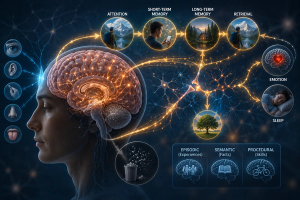
Instead, your sense of time is heavily influenced by how many new experiences, memories, and events you process.
When life is filled with novelty, your brain records more details, making that period seem longer in hindsight.
When days become repetitive, your brain stores fewer distinct memories, causing time to feel as though it passed much more quickly.
In other words, your perception of time is shaped more by memory than by minutes.
Childhood is full of firsts
Think back to your early years.
Your first day of school.
Learning to ride a bicycle.
Making new friends.
Taking family vacations.
Almost everything was new.
Because your brain was constantly processing unfamiliar experiences, it created a rich collection of memories.
Those years often feel long because they contain so many unique moments.
Children are learning about the world almost every day, and their brains are working hard to absorb enormous amounts of new information.
This constant novelty stretches the way time feels in memory.
Routine makes time seem faster
As adults, life often becomes more predictable.
We wake up at similar times, drive familiar routes, work in the same environment, and follow many of the same routines each day.
Routine is helpful because it allows the brain to work more efficiently.
Instead of paying close attention to every familiar activity, the brain begins operating on autopilot.
While this saves mental energy, it also means fewer unique memories are created.
When you later look back on the week or month, there are fewer standout events for your brain to recall, making the time seem as though it disappeared quickly.
Each year becomes a smaller part of your life
Another popular explanation involves perspective.
When you’re five years old, one year represents 20% of your entire life.
By the time you’re 50, one year represents only 2%.
As your lifetime grows longer, each individual year becomes a smaller fraction of your overall experience.
Although scientists debate exactly how much this contributes, many researchers believe it plays at least some role in why years seem shorter as we age.
Our brains naturally compare new experiences with everything that has come before.
Attention changes your perception of time
Have you ever noticed that time feels slow while you’re waiting in a long line but seems to fly by when you’re enjoying yourself?
Attention plays a major role.
When you’re focused on the passage of time, every minute feels longer.
When you’re deeply engaged in an activity, your attention shifts away from the clock, and time appears to pass much more quickly.
This is why an exciting vacation may feel like it ends too soon, while a boring meeting can seem to last forever.
Our experience of time depends as much on where our attention is directed as on the actual amount of time passing.
New experiences help slow time down
The good news is that your perception of time isn’t fixed.
Studies suggest that introducing novelty into your life can make time feel richer and more memorable.
That doesn’t necessarily mean taking expensive trips or making dramatic life changes.
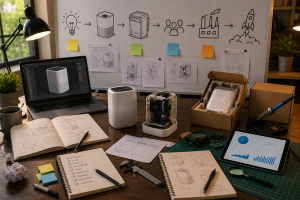
Simple experiences can make a difference, such as:
- Learning a new skill
- Visiting unfamiliar places
- Reading different kinds of books
- Meeting new people
- Trying a new hobby
- Taking a different route home
Each new experience encourages your brain to pay closer attention, creating stronger memories that make life feel fuller when you look back.
Sleep and stress also influence time
Your physical and mental health can affect how you experience time.
Periods of chronic stress often blur together because the brain is focused on managing challenges rather than forming detailed memories.
Poor sleep can also reduce attention and memory formation, making days feel less distinct.
On the other hand, getting enough rest, staying mentally engaged, and maintaining healthy routines can help improve memory and make experiences feel more meaningful.
Our perception of time isn’t just psychological—it is also connected to overall brain health.
Scientists are still learning
Although researchers understand many factors that influence time perception, there isn’t a single explanation that answers every question.
Memory, attention, emotion, age, routine, and brain activity all appear to work together.
Different people may also experience time differently depending on their lifestyles, personalities, and daily experiences.
Like many aspects of the brain, our sense of time remains an active area of scientific research.
Time isn’t speeding up—your brain is changing
It may feel like the years are passing faster than ever, but the clock hasn’t changed.
What has changed is the way your brain records experiences.
As childhood gives way to routine, fewer novel memories are formed, making months and years seem to pass more quickly when you look back on them.
The encouraging part is that you can influence this perception.
By seeking new experiences, staying curious, and paying attention to the present, you give your brain more memorable moments to hold onto.
Time may always move at the same pace—but the way you experience it can be surprisingly flexible.