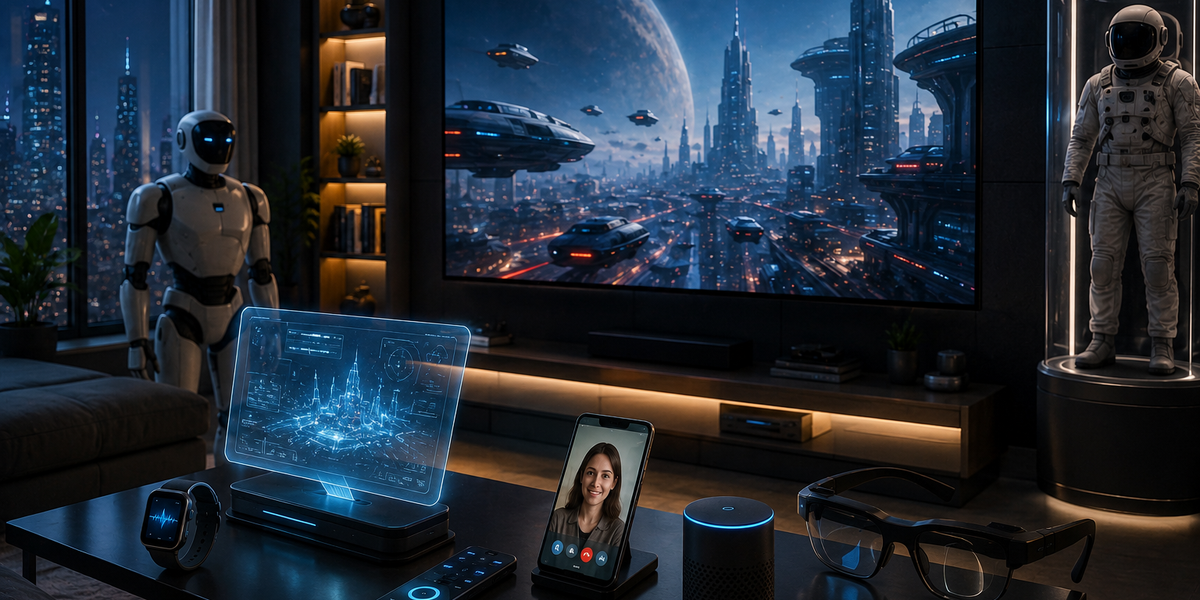
The Sci-Fi Movies That Predicted Real Technology
Science fiction has always been about imagining the future.
For decades, filmmakers have introduced audiences to futuristic gadgets, intelligent robots, virtual worlds, and space travel that seemed impossible at the time. Yet many of those fictional ideas have gradually become part of everyday life.
While movies don’t literally predict the future, they often inspire scientists, engineers, and entrepreneurs to turn imaginative concepts into real technologies. Sometimes, what begins as entertainment ends up influencing the direction of innovation itself.
Here are some of the science fiction movies that came surprisingly close to predicting technologies we use—or are beginning to develop—today.
2001: A Space Odyssey
imagined AI assistants
Released in 1968, 2001: A Space Odyssey introduced audiences to HAL 9000, an intelligent computer capable of understanding speech, holding conversations, and controlling a spacecraft.
Although HAL’s behavior became dangerously fictional, the idea of talking naturally with a computer no longer seems extraordinary.
Today, AI assistants can answer questions, translate languages, summarize documents, generate text, and respond to spoken commands.
Modern artificial intelligence is far from HAL’s level of autonomy, but conversational AI has become one of the fastest-growing areas of technology.
Star Trek
inspired everyday gadgets
The original Star Trek television series and later films showcased technologies that seemed impossible in the 1960s.
Crew members communicated using handheld devices that strongly resemble today’s smartphones. They used voice-controlled computers, portable medical scanners, tablet-like devices, and even automatic sliding doors.
Many engineers have openly acknowledged that Star Trek inspired their work.
While the series wasn’t trying to predict specific inventions, its optimistic vision of technology encouraged generations of innovators to build them.
Minority Report
imagined gesture controls
When Minority Report was released in 2002, its futuristic interface attracted enormous attention.
The film showed large transparent displays controlled through hand gestures rather than keyboards or mice.
Although most people still use touchscreens today, gesture-controlled technology now exists in virtual reality headsets, interactive displays, and certain medical and industrial systems.
The movie also explored personalized advertising and advanced facial recognition—technologies that have become increasingly common in the real world.
Back to the Future Part II
got some things surprisingly right
Released in 1989, Back to the Future Part II imagined life in 2015.
Not every prediction became reality—flying cars remain rare—but several ideas came remarkably close.
The film featured video calls, wearable technology, biometric authentication, smart glasses, and large flat-screen televisions.
Today, video conferencing, smartwatches, and facial recognition are part of everyday life for millions of people.
Although the timeline wasn’t perfect, many of the concepts proved surprisingly accurate.
The Matrix
explored virtual reality
The world of The Matrix remains firmly in the realm of fiction, but its exploration of immersive digital environments anticipated growing interest in virtual and augmented reality.
Modern VR headsets allow users to enter interactive digital worlds for gaming, education, training, and collaboration.
While today’s technology is nowhere near the fully immersive simulation shown in the film, the underlying idea of experiencing digital environments has become increasingly practical.
The movie also raised philosophical questions about artificial intelligence and digital reality that remain relevant today.
Her
imagined emotionally intelligent AI
Released in 2013, Her tells the story of a man who develops a relationship with an advanced AI assistant capable of natural conversation.
At the time, the idea seemed far-fetched.
Today, conversational AI has become dramatically more sophisticated, allowing people to interact with AI through natural language rather than simple commands.
Current AI systems don’t possess emotions or consciousness like the fictional assistant in Her, but the movie anticipated how naturally people might one day communicate with intelligent software.
Science fiction often inspires innovation
One reason science fiction appears so accurate is that many scientists and engineers grew up watching these films.
Instead of merely predicting technology, science fiction often inspires people to build it.
Engineers have cited movies and television shows as motivation for developing everything from smartphones and tablets to reusable spacecraft and wearable devices.
Imagination frequently comes before invention.
By exploring what’s possible, science fiction expands the range of ideas people are willing to pursue.
Not every prediction comes true
Of course, science fiction also gets plenty of things wrong.
Flying cars aren’t a common sight, teleportation remains impossible, and fully autonomous humanoid robots are still far more limited than Hollywood often suggests.
Movies are designed to entertain rather than forecast technological progress accurately.
They often prioritize dramatic storytelling over scientific realism.
Still, it’s remarkable how many fictional ideas have gradually become part of everyday life.
Yesterday’s fiction, today’s reality
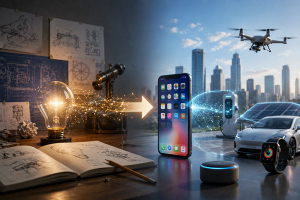
Looking back, it’s clear that some of the most memorable science fiction movies didn’t simply entertain audiences—they helped shape how people imagined the future.
Voice assistants, video calls, wearable devices, artificial intelligence, virtual reality, and gesture-controlled interfaces all appeared on screen long before they became widely available.
While no movie can predict the future perfectly, science fiction has a unique ability to spark imagination and encourage innovation.
The next breakthrough technology may already exist—not in a laboratory, but in the script of a movie that’s inspiring the next generation of inventors to turn fiction into reality.