How Vaccines Actually Work (Explained Simply)
Vaccines are one of the greatest advances in modern medicine, yet they’re also one of the most misunderstood.
Many people know that vaccines help prevent disease, but fewer understand how they actually work inside the body. Do they fight viruses directly? Do they stay in your body forever? Or do they somehow make you immune overnight?
The answer is simpler than you might think.
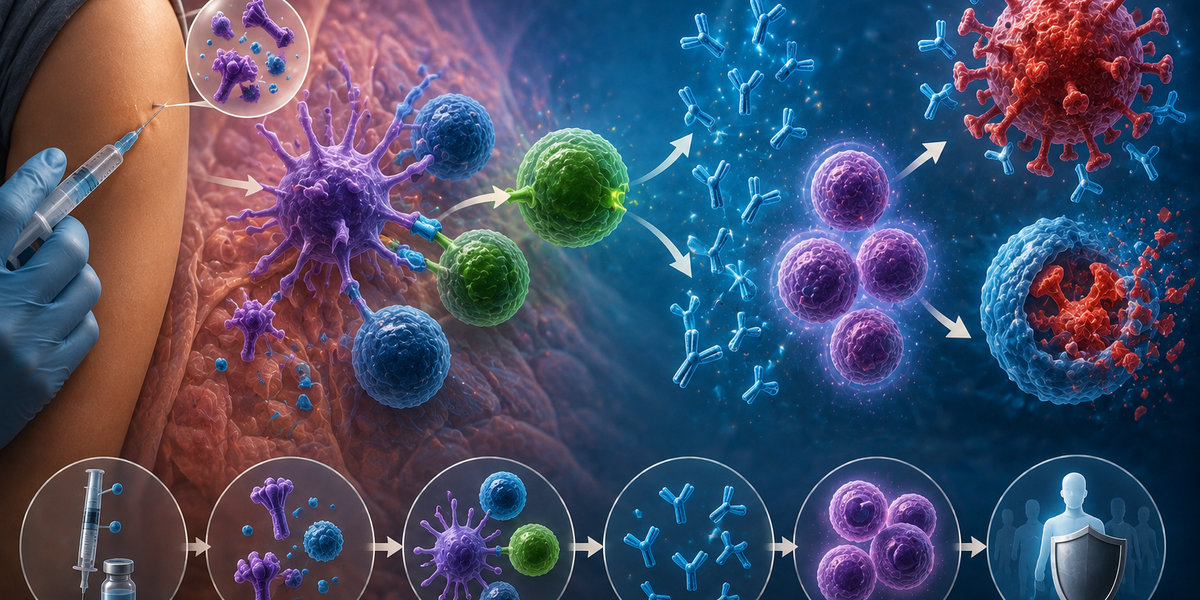
Vaccines don’t destroy viruses or bacteria themselves. Instead, they teach your immune system how to recognize dangerous germs before you encounter them in real life. It’s a bit like giving your body’s defense system a practice run before a real emergency.
Here’s how the process works, step by step.
Your immune system is your body’s defense team
Every day, your body encounters countless bacteria, viruses, and other microorganisms.
Most are harmless, but some can cause disease.
Fortunately, your immune system is constantly protecting you. It works like a highly trained security team, identifying threats and responding to them before they can spread throughout your body.
When your immune system encounters a new virus for the first time, however, it may need time to figure out how to fight it effectively.
During that delay, the virus can multiply and make you sick.
Vaccines help solve this problem by preparing your immune system in advance.
Vaccines introduce a harmless version of the threat
A vaccine doesn’t usually contain the full, disease-causing version of a virus or bacterium.
Instead, it may contain:
- A weakened version of the germ
- An inactivated (dead) version
- A harmless piece of the virus or bacterium
- Instructions that help your cells briefly produce a harmless protein found on the virus
None of these are capable of causing the disease they’re designed to protect against in healthy individuals.
Their purpose is simply to introduce your immune system to what the real threat looks like.
Think of it like showing security guards a photograph of someone they’re looking for before that person ever arrives.
Your immune system begins training
Once the vaccine enters your body, your immune system immediately gets to work.
It recognizes that something unfamiliar has appeared and begins studying it.
Special immune cells identify the foreign material and launch a response, even though the vaccine itself isn’t causing the actual disease.
During this process, your body starts producing antibodies.
Antibodies are proteins specifically designed to recognize and attach to certain viruses or bacteria.
Each type of antibody is made to target a particular threat.
Your body creates immune memory
One of the most remarkable features of the immune system is its memory.
After responding to the vaccine, your body creates long-lasting memory cells.
These cells remember what the virus or bacterium looks like, sometimes for years and, in some cases, even for life.
If the real germ enters your body later, your immune system doesn’t have to start from scratch.
Instead, it immediately recognizes the threat and begins producing the right antibodies much more quickly.
This rapid response often stops the infection before you develop serious illness.
Why some vaccines require booster doses
Not every vaccine provides lifelong protection after a single dose.
Over time, immune memory can weaken for certain diseases.
Booster shots help remind your immune system what the threat looks like and strengthen its response again.
You can think of a booster as a refresher course.
Your immune system already knows the material, but reviewing it helps keep the response fast and effective.
This is why some vaccines are given once, while others require periodic boosters.
Can vaccines make you sick?
Some people experience mild side effects after vaccination.
These may include:
- Soreness where the injection was given
- Fatigue
- A mild fever
- Headache
- Muscle aches
These reactions are generally temporary and are often a sign that your immune system is responding to the vaccine.
Because your immune system is becoming active, it’s normal for some people to feel slightly unwell for a day or two.
These short-term effects are very different from the actual diseases that vaccines are designed to prevent.
Why vaccines protect communities too
Vaccination doesn’t only protect the person receiving the vaccine.
When many people in a community are immune to a disease, it becomes much harder for that disease to spread.
This helps protect individuals who cannot receive certain vaccines because of medical conditions or whose immune systems are weakened.
The fewer opportunities a virus has to spread, the less likely it is to reach vulnerable people.
This community-wide benefit has helped reduce or eliminate many serious infectious diseases in different parts of the world.
One of medicine’s greatest achievements
Vaccines have dramatically reduced the number of illnesses and deaths caused by infectious diseases over the past century.
Diseases that once caused widespread outbreaks have become rare in many countries because vaccination allows immune systems to recognize dangerous germs before they cause severe illness.
Scientists continue developing new vaccines to protect against emerging diseases and improve existing ones.
As medical research advances, vaccines remain one of the most effective tools for preventing infectious disease.
Training before the real test
The easiest way to understand a vaccine is to think of it as a training exercise for your immune system.
Rather than waiting until you’re exposed to a dangerous virus or bacterium, the vaccine gives your body’s defenses a chance to prepare in advance.
By introducing a harmless version or component of a germ, your immune system learns how to recognize it, builds antibodies, and creates long-lasting immune memory.
Then, if the real threat appears later, your body is ready.
Instead of facing an unfamiliar enemy, your immune system already knows exactly what it’s dealing with—and can respond much faster to help protect your health.